



2022-5-2
Tina Xie /photo by courtesy of ITRI /tr. by Phil Newell
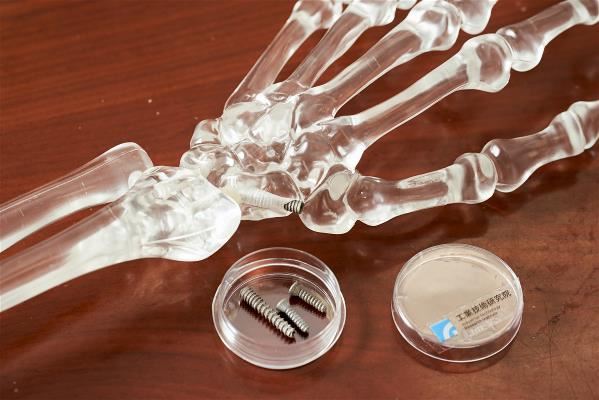
What can 3D printing be used for? Models, houses, pizzas? While in the imaginations of most people its applications are limited to simple layering tasks, Taiwanese scientists are already using 3D printing technology in the laboratory to produce sophisticated biomedical materials such as artificial skin, artificial bone, and removable denture frameworks. Not only is the process fast, but it permits customization that better meets the needs of patients.
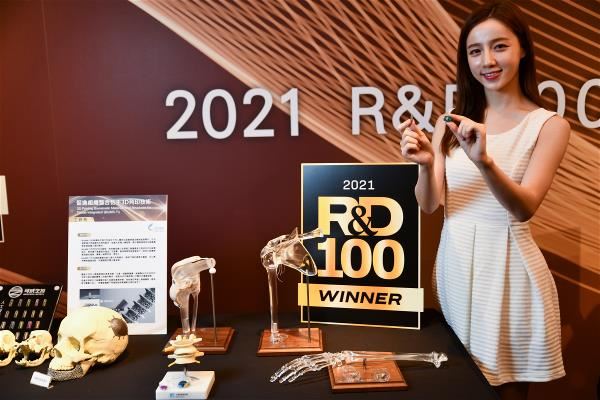
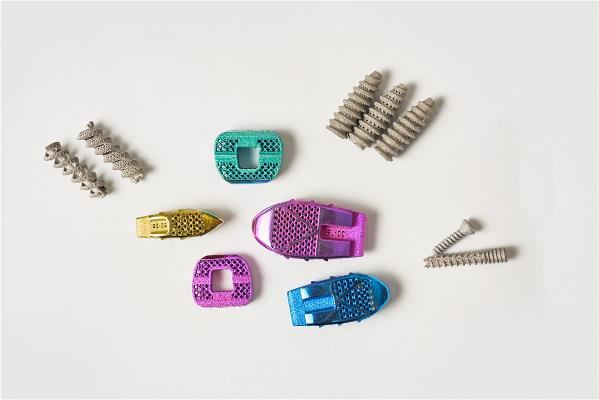
Technologies for 3D printing of “biomimetic materials and structures for tissue integration” (BioMS-Ti), developed by Taiwan’s Industrial Technology Research Institute (ITRI), can be used to produce highly stable microporous prosthetic bone material into which blood vessels and cells can grow, integrating them into the human body. This product is already in use in a number of medical centers in southern Taiwan, and in 2021 it won an R&D 100 Award in the US. Besides bone material, ITRI can also use 3D printing to produce artificial skin, which has a more complex composition than bone, with printing and cell infiltration and differentiation being completed in only six days, giving Taiwan the fastest such system of any country in the world. ITRI expects to conduct more exchanges with foreign research teams in the future, and to utilize 3D printing to provide doctors and researchers with more efficient and more precise tissue repair and regeneration technologies.
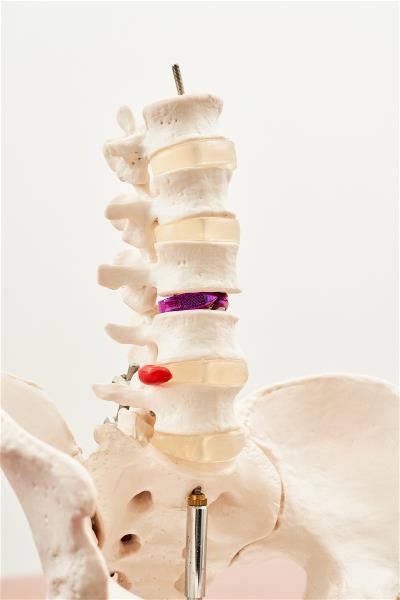
3D-printed bone
3D printing involves entering a product’s three-dimensional design into a computer to analyze the shape into layers. The printer then deposits powdered material layer by layer to build up the product.
This seemingly simple principle in fact includes many details that require attention. For example, technology teams in some European countries are also working on artificial bone, but the ITRI has the edge in terms of “the structural mechanics of the design and the quality and reliability of the production process,” says Shen Hsin-hsin, deputy director of the Biomedical Technology and Device Research Laboratories at ITRI, adding that 3D printing requires precise temperature control to ensure that the molten powder forms into a stable structure.
After a product prototype is completed, it must undergo several million stress cycles in dynamic and static fatigue testing, and there are different legal requirements for testing of bone materials with different structural designs. For example, the cervical vertebrae (in the neck) have to be able to rotate and move up and down (such as when nodding one’s head), while the lumbar vertebrae (in the lower back) need to support weight. To date the ITRI has developed five to six types of artificial bone, each of which meets mechanical requirements set by the US Food and Drug Administration for implantation in different parts of the body.
In this development process, the clinical experience of doctors has been invaluable. After many discussions with doctors, through which the researchers gained a better understanding of the characteristics of muscle and bone cells, ITRI designed materials that are better adapted to the surrounding biological structures in order to reduce potential injury to surrounding tissue and ensure that the artificial materials are no longer rejected as “foreign matter” by human tissue.
“In the past, with solid artificial bone, when the material was implanted in the human body cells could only grow on the surface. But with porous artificial bone, cells can grow into the material, which becomes part of the tissue and will not detach from it.” Shen notes that besides the structural design of the artificial bone, biomedical ceramics or osteoinductive drugs can be added to encourage new bone to grow into the implant for better integration.
Customization and comfort
On the subject of 3D-printed metal frameworks for removable partial dentures (RPD), which the ITRI developed before it began working on artificial bone, Tsau Fanghei, general director of the ITRI Southern Region Campus, notes that traditionally RPD frameworks are made from cobalt‡chromium alloy, and their shape cannot not be matched perfectly to the user’s oral cavity, inevitably leading to discomfort, so that some people choose to wear them only when eating. However, he says with enthusiasm, “For 3D-printed frameworks, first a scan is made of the oral cavity so that the framework is personalized for the individual. Even the feeling of the tongue touching the metal is different from in the past.”
But can ordinary people afford the cost of using such sophisticated technology to make their dentures? Tsau says with a laugh: “The machine can make individualized RPD frameworks for 20 different patients at once, so the cost is about the same as the traditional process.” Today, patients who visit medical centers in Southern Taiwan can get dentures made with customized 3D-printed RPD frameworks along with dental crowns manufactured by dental laboratories. Moreover, in order to make continual progress in this field, ITRI has created an environment in the Kaohsiung Science Park that complies with legislation governing medical devices, in order to train a new generation of dental technicians in the use of 3D printing.
For artificial skin, which has a far more complex composition than artificial bone, the material used in 3D printing is not metal powder, but rather cells and collagen. Printing requires a vast number of cells, so the first step taken by the Biomedical Technology and Device Research Laboratories was to select ingredients needed to promote cellular differentiation. This was followed by choosing the right materials to enable the dermis and epidermis to combine perfectly when they are printed together, and for the artificial skin to be ready for use after six days of maturation.
In contrast, says Shen Hsin-hsin, “At major overseas companies they first grow the dermis for several weeks, then add on the epidermis, so it takes at least 21 to 28 days to complete the process.” She explains that the key to ITRI’s greater efficiency lies in the precise selection of materials. This includes the types and sources of collagen and the materials used to join together the dermis and epidermis, which are of different mechanical strengths. By way of illustration, Shen says: “Imagine you want to connect two types of soft candy with different degrees of elasticity. What material would be most appropriate?”
The artificial skin manufactured by ITRI has a broad range of uses. For example, with both the European Union and Taiwan having banned animal testing by the cosmetics industry during the last ten years, artificial skin can be used for testing make-up and skin-care products. Pharmaceutical companies can also use it to undertake various in-vitro experiments on skin cells such as injury through exposure to ultraviolet rays, anti-aging treatments, and wound healing. In the field of medical care, artificial skin with added stem cells can be used to treat burn victims.
Foreign firms are already in contact with the ITRI to discuss purchasing both products and technology, while in 2019 researchers from the Czech Academy of Sciences came to Taiwan and spent more than a month observing the manufacturing process and thinking about how to combine Taiwan’s materials and technology with the Czech cell bank to produce artificial skin that matches the physical characteristics of Czech people.
There is already a trend in the cosmetics industry toward using artificial skin, and many famous brands including L’Oréal have set up R&D centers. Shen Hsin-hsin says that she greatly looks forward to working with leading firms and selling Taiwan’s highly efficient, high-quality technology to even more countries.

"Zero-defect" printing
ITRI has developed embedded software and a database so that through simulation the system can automatically discover the factors needed to successfully print a product.
With this “zero-defect” software, the time it takes for novices to get the hang of 3D printing can be reduced from two or three months to one or two weeks. The biomedical, aerospace, and shoe manufacturing industries in Taiwan are already using the software, and foreign firms are looking to purchase it. Thanks to this technology, ITRI is much faster at developing products than many foreign companies, and the production process is also more rapid. 3D-printed artificial skin is ready to use after only six days, RPD frameworks can be delivered to the dental practice within a day, and artificial bone can be made within eight hours.
The capabilities of 3D printing will also be deployed in the operating room. “We are currently developing a machine that can print out sheets of cells at any time for use in surgery; it’s about the size of a coffee maker,” says Shen Hsin-hsin. A prototype has already been built and in the future the machine can be used for surgical emergencies. Seeing a new technology that is like something you’d see in a science fiction movie about to come to fruition, Shen says with a smile: “I often make wishes with the team, and the team makes those dreams come true.”
All of this technological innovation is aimed at improving people’s quality of life. Tsau Fanghei estimates that following successful trials on 30 to 40 human subjects, 3D-printed bone replacement technology for the jaw and oral cavity will be able to help nearly 8000 oral cancer patients in Taiwan each year. ITRI has already achieved remarkable success in medical applications of 3D printing, and they welcome academic institutions and companies from around the world to come to Taiwan to exchange expertise in this field, again demonstrating the spirit of “Taiwan can help.”

Article and photos courtesy of Taiwan Panorama April 2022
