



2024-12-6
Esther Tseng /photo by Kent Chuang /tr. by Phil Newell
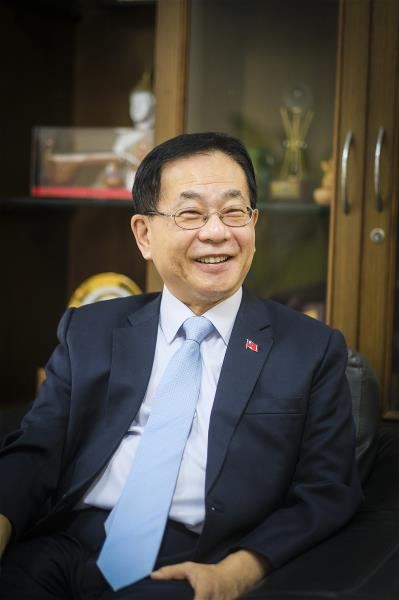
“Taiwan is India’s most important collaborative partner in its effort to achieve a prosperous India in 2025,” emphasizes Ambassador Ger Baushuan, Taiwan's representative to India.
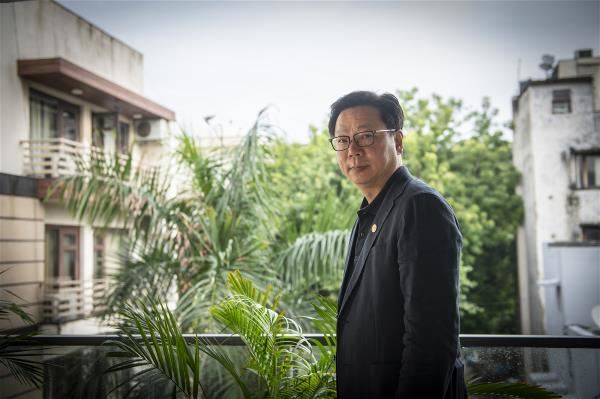
“Right now is the most opportune moment to invest in India,” says Jason Ho, president of the Taiwan Chamber of Commerce in India.
As auto-trishaws chug along a quiet street named Paschimi Marg in New Delhi, though it is not yet 9 a.m. there are already Indian visitors lining up outside the Taipei Economic and Cultural Center in India (TECC) waiting to deal with visa matters. They helpfully tell us that the TECC does not open for business until nine o’clock.
Ambassador Ger Baushuan, Taiwan’s representative to India, takes time out before hurrying off to a meeting with a member of parliament from the ruling Bharatiya Janata Party to be interviewed by Taiwan Panorama. Ger says with a broad smile: “He’s a very good friend. I haven’t seen him in a while, and he only has free time today.”
The most opportune moment
Ger notes that this year Taiwan–India bilateral trade is expected to surpass US$8.4 billion, a new historic high, and it will continue to grow.
In fact, going back to 1995, when Taiwan and India first agreed to establish representative offices in each other’s capitals, for a long time there was little economic interaction between the two nations. The main cause of the dramatic change in this respect has been “India’s great determination to succeed.” Ger explains that Narendra Modi, who is serving his third consecutive term as India’s prime minister, has proposed the “Viksit Bharat” program to transform India into a developed and prosperous nation by 2047, the centenary of Indian independence. To this end, India is investing heavily in infrastructure projects such as airports and highways, and development is proceeding rapidly in many sectors of the economy.
Secondly, the partly disputed 3,400-kilometer border between India and China has created a uniquely complex bilateral relationship between those two countries. “Under these constraints, India is willing to work with Taiwan. Moreover, all sectors of society in India are very friendly toward Taiwan and are looking forward to Taiwan playing a bigger role in India’s future.”
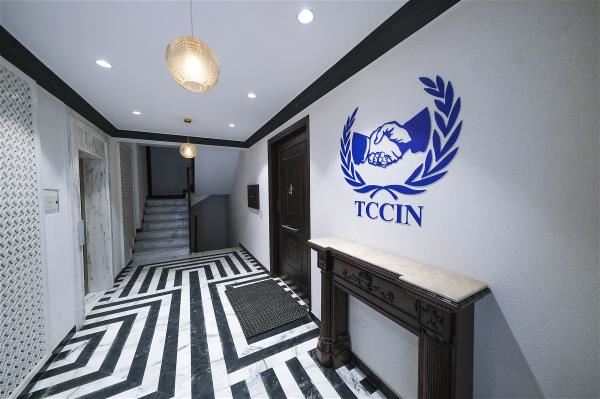
The Taiwan Chamber of Commerce in India
Jason Ho, president of the Taiwan Chamber of Commerce in India (TCCIN) and chairman of Taisys Technologies Group, notes that since Prime Minister Modi took office in 2016 and implemented policies such as the uniform national Goods and Services Tax system as well as infrastructure projects like the creation of industrial corridors, India has steadily become a normalized, healthy market. Most importantly, geopolitical changes over the past three years have caused supply chains to relocate from China to India, giving India a tremendous development opportunity.
“In view of the wave of rapid growth over the last three years, I think that now is the best time to invest in India,” says Ho. At the beginning of 2024 there were about 250 Taiwanese businesses operating in India, but as the year’s end approaches there are nearly 300.
“In the past, Taiwanese businesses in India were on their own with no help, and a lot of valuable experience was not passed down.” Ho took over as president of the Taiwan Chamber of Commerce in Delhi (TCCD) in July of 2023. “I was given one job: To set up the TCCIN and thus create a platform to serve the needs of Taiwanese firms.”
The TCCIN has opened a clubhouse in a part of New Delhi similar to Taipei’s toney Da’an District, where it can receive members of Taiwanese chambers of commerce based in India and elsewhere. In September 2024 a new regional Taiwanese chamber of commerce was set up in West Maharashtra, and a clubhouse was opened in Chennai (Madras). Other clubhouses will be opened in Mumbai and Bengaluru (Bangalore) in the future.
“India is vast. I hope that a chamber of commerce will be set up in every city where there are Taiwanese firms, and that they will become part of a close-knit network,” says Ho.
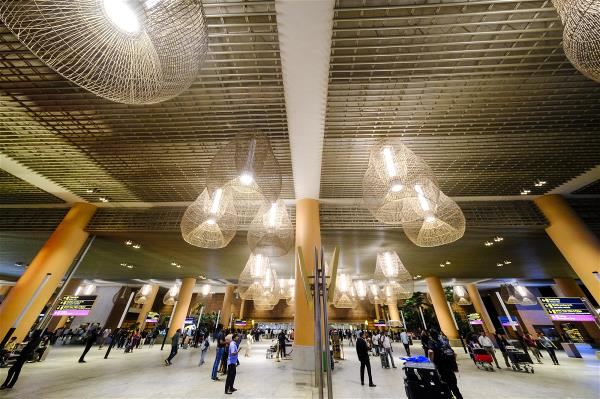
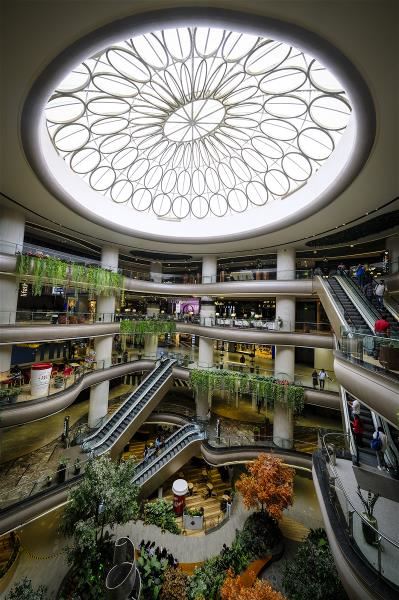
Bellwether firms
Ger says: “Given the combined capabilities of Taiwanese enterprises, Taiwan has a part to play in India’s economic development. We need to position ourselves to do so, especially in electronics manufacturing, because India really wants to work with Taiwan.”
Powerchip Semiconductor Manufacturing Corporation (PSMC), a Taiwanese semiconductor foundry, has been working with India’s Tata Electronics with the aim of building India's first wafer factory in Gujarat (Prime Minister Modi’s home state), which is expected to create over 20,000 jobs. Ger says that PSMC is licensing technology to build a 12-inch wafer plant, helping India create a new industry from scratch. Taiwan is playing an important role in this significant strategic step.
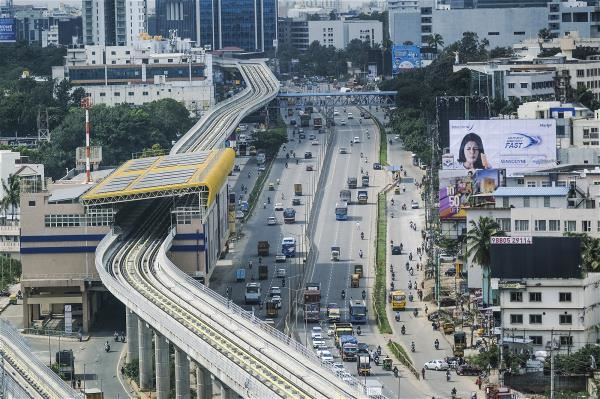
The Indian government also greatly values the contribution of Hon Hai Technology Group (Foxconn), a major electronics manufacturer that has been in India for more than 20 years. Hon Hai has already invested nearly US$10 billion in India, including building iPhone assembly plants, as well as electric vehicle parts manufacturing and assembly factories, in the southern Indian states of Karnataka and Tamil Nadu.
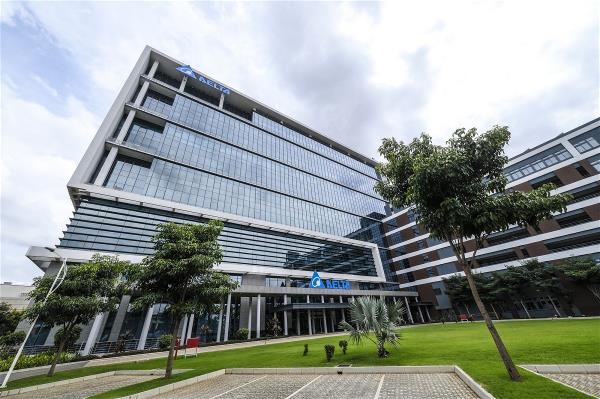
In September of 2024 Delta Electronics celebrated its 20th anniversary in India and announced the construction of a new headquarters building and R&D center in Bengaluru, the state capital of Karnataka. Benjamin Lin, president of Delta Electronics India, says: “Delta is investing heavily in India not only because of its competitive advantage in technology but also its supply of skilled manpower.”
Setting up shop in Mumbai
In September of 2024 Ger completed his fourth year in post in India. Asked about his proudest achievement, he points to the establishment of the Mumbai office of the TECC on October 16. It has been 12 years since the last opening of a new TECC office, in Chennai. Based on their geographic positions, the three offices will henceforth form a “golden triangle” for Taiwan in India.
The Mumbai office will help to promote exchange between Taiwan and Western India in the areas of science and technology, culture and education, and people-to-people contacts, and will provide consular services including visas, document authentication and emergency assistance to overseas-based Taiwanese nationals and Indian business travelers in the four states of Maharashtra, Goa, Gujurat and Madhya Pradesh, as well as the Union Territory of Dadra and Nagar Haveli and Daman and Diu.
Aiming for a free trade agreement
“Right now, our highest priority is to sign a free trade agreement with India. We don’t care about the name,” says Ger with urgency. “Without a bilateral FTA, Taiwan’s small and medium-sized enterprises cannot enter the Indian market, so our current trade and investment agreements need to be upgraded.”
Ger explains by telling us a story: “A couple of years ago, a state governor from Northeast India sent me some pineapples, which were comparable in sweetness to Taiwanese pineapples. His subordinate had been to Taiwan and really enjoyed the pineapple cakes made by Chia Te Bakery. He hoped that Chia Te could set up operations in his region, because cakes made in Taiwan face a 50% import tariff, making them too expensive. I went online and found a recipe for pineapple cakes which I sent to the governor, recommending that they make the cakes themselves. However, if the Indian government could reduce the tariff, pineapple cake manufacturers in Taiwan would be able to export their products to India. If they sold well, in quantities that could not readily be produced in Taiwan, they would soon set up factories in India.”
Ger says that this is why Taiwan wants to sign an FTA—so that trade can drive investment in India by SMEs.
Ger often tells the Indian government, business community, and academics: “Taiwan will not be exporting TVs or fridges to India, but rather intermediate products which will be assembled in India and exported to other countries. Thus Taiwanese firms will not be competing with Indian firms, but will be complementary.”
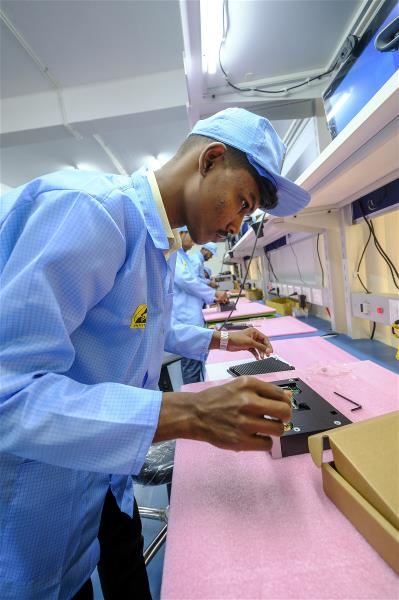
Advantech Company, which leads the world’s industrial PC market by market share, has a production base in Bengaluru where parts from Taiwan are assembled by local engineers and sold all over India with a “Made in India” label. Just as Ger says, manufacturing in India using materials supplied from Taiwan can be a mutually beneficial relationship.
The importance of interactions
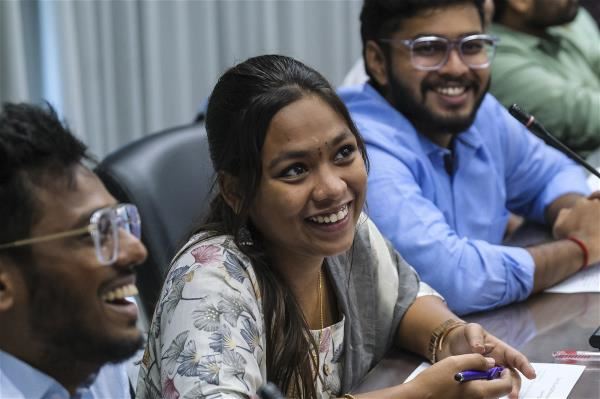
“At present there are some 3,000 students from India studying for master’s or doctoral degrees in Taiwan. This is far from enough,” says Ger. “Since I came to India, we have set up 37 Taiwan Education Centers on university campuses here.” These give Indian students a place to learn Chinese and encourage them to come to Taiwan to study.
Ger explains the importance of this policy: “We want to help Indians to become valuable contributors to Taiwanese companies.” After returning to India, these students who understand Taiwan and can speak Mandarin will be able to offer a great deal of assistance to Taiwanese firms.
“Several months ago I visited the official in charge of higher education in the Indian Ministry of Education, and he was very enthusiastic about our proposal for the governments of Taiwan and India to each provide half of the funding to open 100 Taiwan Education Centers,” relates Ger.
Ger Baushuan says: “I think that one of the most successful aspects of the New Southbound Policy is people-to-people exchanges.” If things continue on their present course, interactions between Taiwan and India will only deepen further.

Article and photos courtesy of Taiwan Panorama November 2024
