



2026-9-18
(Courtesy of Taiwan Panorama September 2026)
Joanna Wang /photo by Jimmy Lin
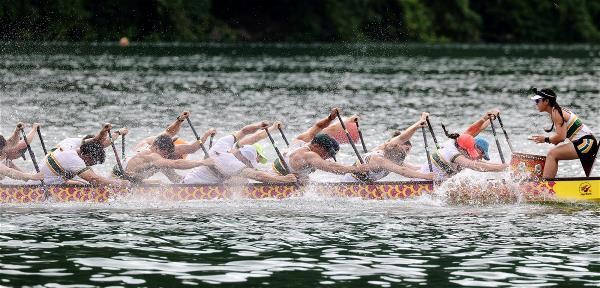
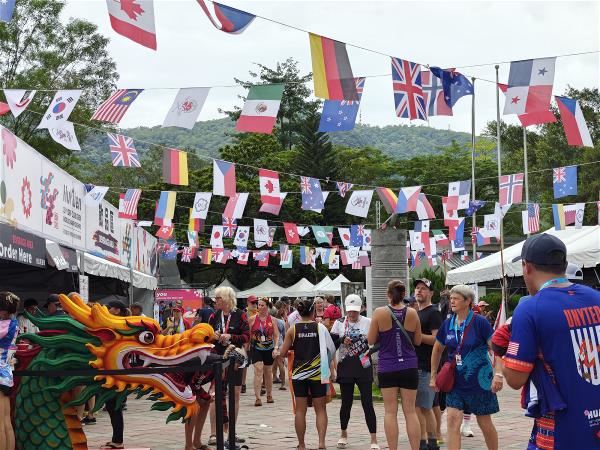
The 15th International Dragon Boat Federation (IDBF) Club Crew World Championships (CCWC) made its Taiwan debut in Hualien. This top-tier international competition for club crews brought together some 5,800 athletes and support staff from 21 countries for contests of power and speed. The thrilling races stopped passersby in their tracks, prompting exclamations like “I had no idea dragon boating could be this fast—or this cool!”
Survivors racing to win
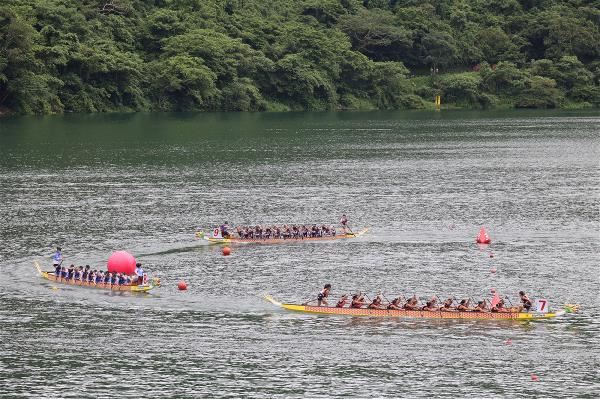
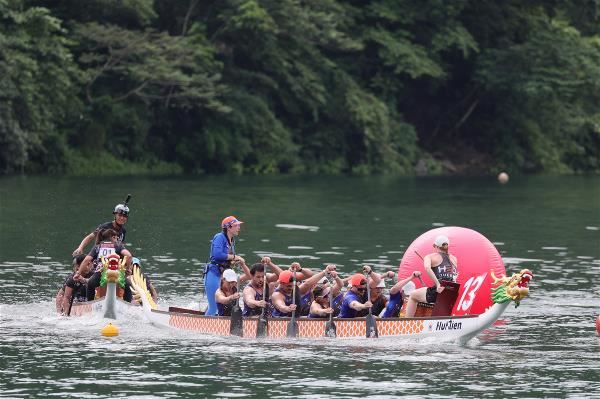
In late August and early September, sunlight glittered across Liyu Lake in Hualien as racing dragon boats surged through the water to the sounds of pounding drums and cheers.
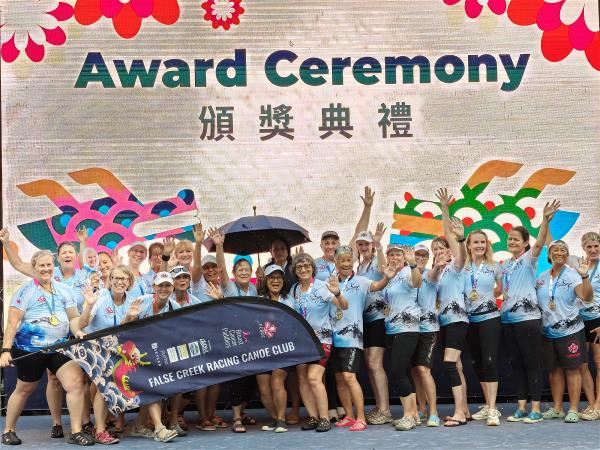
Canada is a dragon boat racing powerhouse, and it demonstrated its quality again this year as its clubs topped the aggregate medal count. Among the standout crews was False Creek BCP, an all-female Canadian team of breast cancer survivors. Founded in 2023, the team trains at high intensity five or six times a week. Asked why she loves dragon boating, coach Susan Mott says nothing about healing or overcoming illness. Her answer is simply, “It’s the competitiveness.” These athletes are not here merely to take part; they race to win.
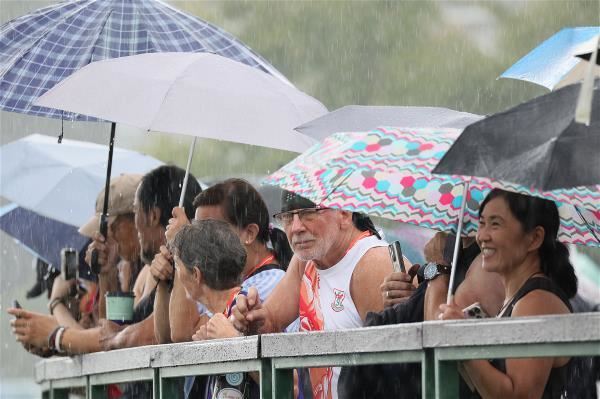
For Mott, making her first visit to Taiwan, the event’s shifts between sunshine and rain worked in the team’s favor. “The cool weather helped us perform at our best,” she says. She also praises the organizers’ efficiency in keeping the races on schedule. Competing in such a beautiful setting and experiencing the warmth of the Taiwanese people, she adds, made the trip especially rewarding.
Twenty paddlers, one team
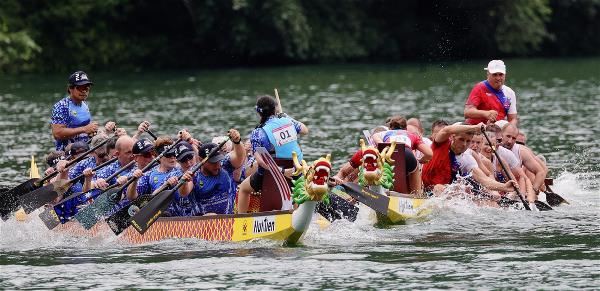
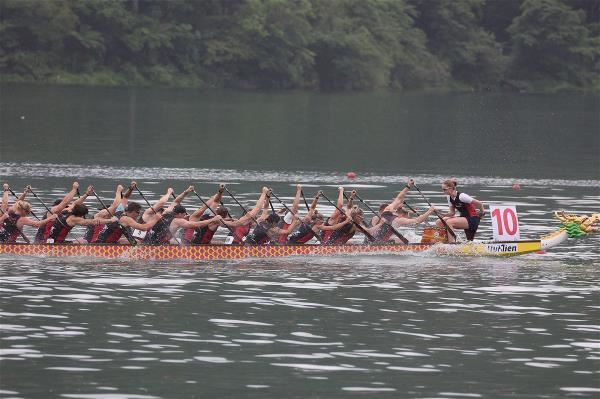
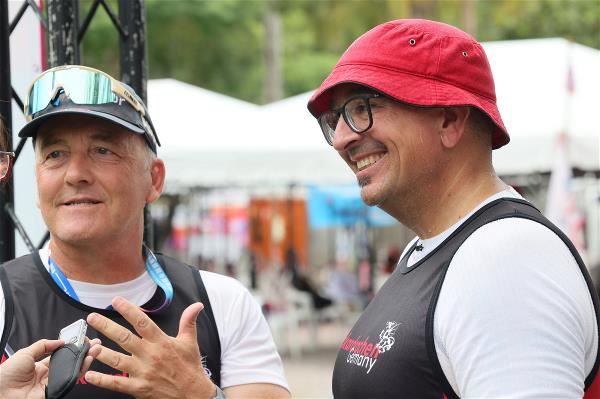
Germany’s Neckardrachen, which collected numerous gold and silver medals at this year’s championships, has been involved in the sport for 25 years and has about 400 members in the club. Head coach Uwe Müller says that a dragon boat harnesses the strength of 10 or 20 people working as one, stating: “Twenty people bring the power in the boat.” What the club loves most, he adds, is the feeling of everyone uniting as a team—that’s the spirit of dragon boat racing.
He also sees a contrast in training styles: European and North American crews tend to emphasize strength, while Asian crews are meticulous about technique and display an exceptionally high level of professionalism and competitive skill at elite events. In Hualien, he was delighted to race against Taiwanese crews and enjoyed the atmosphere. He was also impressed by the rigorous event operations and the lively opening parade.
A race and a meeting of cultures
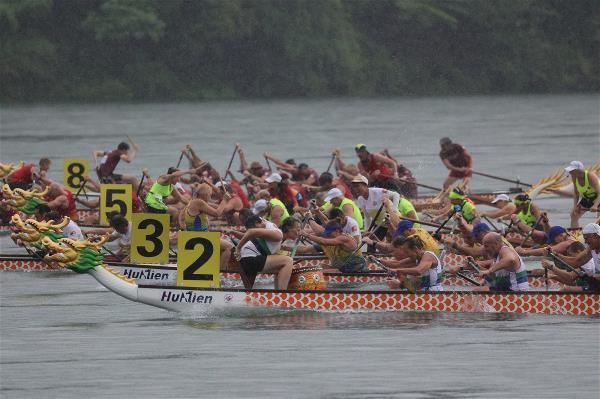
To meet the standards of a major international competition, the Hualien County Government and the organizing committee introduced an automatic starting device and electronic timing system, built a new finish tower, and assembled a fleet of 50 regulation racing dragon boats (25 20-paddler standard boats and 25 10-paddler small boats). The smooth on-site logistics and bilingual livestreaming also earned positive reviews from participating athletes from around the world.
Chiu Yu-che, secretary-general of the Chinese Taipei Dragon Boat Association, says cultural differences posed the greatest organizational challenge. He explains that the IDBF, whose leadership today is largely European and North American, is accustomed to commercializing competitions and favors controlled admission through ticketing. Taiwan, by contrast, wanted to keep the venue open and use the event to promote sport for all. “We wanted to bring people in and let the world see Taiwan’s energy,” he says. The event was therefore not only a competition but also an exercise in cross-cultural understanding and exchange.
Hometown glory for HPEHS
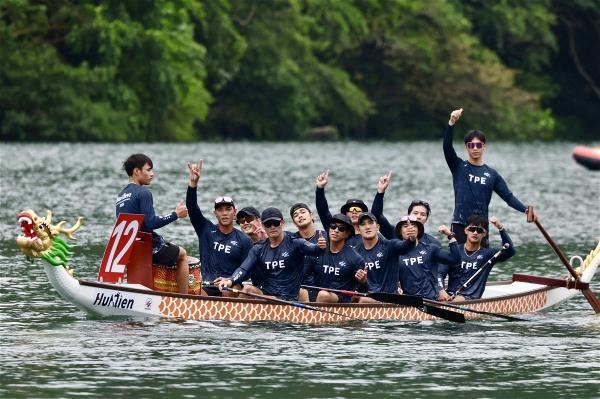
One of Taiwan’s standout crews, home team Hualien Physical Education High School (HPEHS), united alumni and current students under head coach Hou Hung-chang. In the Premier Open Small Boat class, the team swept the field to win a “triple crown” of gold medals over 200, 500, and 2,000 meters.
Hou notes that most of the athletes train primarily in canoeing. Yet whereas canoeing is an individual pursuit, dragon boating requires a whole crew (20 or 10 paddlers plus a drummer and steerer) and team cohesion.
Moreover, medals are never won through last-minute intensive training. The HPEHS team members practice every morning and afternoon at the Hualien Water Sports Training Center at Liyu Lake, completing 11 sessions a week virtually year-round. Behind a gold medal that may look effortless are three, five, or even more years of work; some team members have paddled for over two decades. Hou always urges them to keep pushing. “You always need a goal in life,” he says. Even after a win, there is always a faster time to chase—and after one race, another awaits.
Rivals on the water, friends on shore
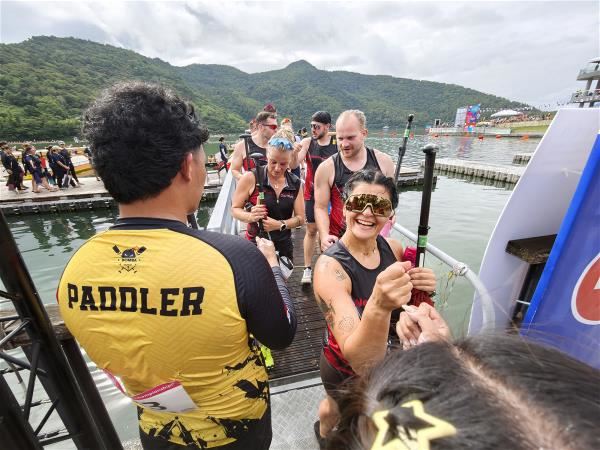
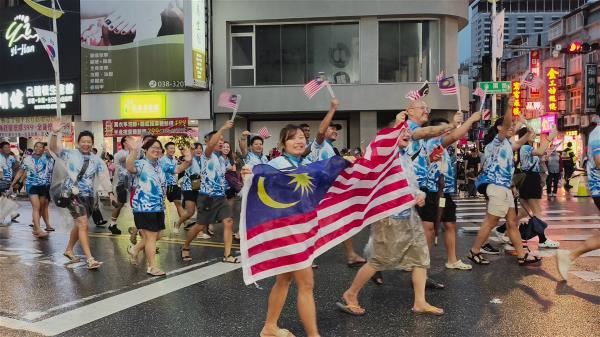
Dragon boating brings together people of diverse backgrounds. Along the shore, a New Zealand crew performs a Māori haka, Canadian paddlers belt out their national anthem, and Paradragon athletes receive enthusiastic cheers and applause as they finish. The sport also has virtually no upper age limit: Paddlers aged 60 and above can compete in one of the Senior classes. But though the participants may be fierce rivals on the course, on land they become friends who exchange high-fives and hugs.
Against the mountain-and-lake scenery of Liyu Lake, the championships showcased both all-out competitiveness and friendship that transcended borders. Dragon boating, now a modern competitive sport, is paddling from Taiwan out into the world.
CCWC at a glance
Often likened to a “World Cup” for dragon boat clubs, the CCWC differs from competitions contested by national teams: Instead, crews from private, school, and independent clubs compete in this event, which is one of the sport’s premier international championships. This year, 158 teams took part, with Taiwan and the United States fielding the largest contingents.
The championships also reflect the sport’s diversity and inclusiveness, with Premier, Senior, Junior, and Paradragon categories, as well as groups for cancer survivors.
● Racing classes and events: Open, Women’s, and Mixed classes are contested in 20-paddler standard boats and 10-paddler small boats (informally, “big boats” and “small boats”) over 200, 500, and 2,000 meters.
● What to watch—the 2,000-meter circuit race: Rarely seen in Taiwan, this time-trial pursuit event sends crews off at intervals for a roughly nine- to ten-minute circuit featuring three turns and opportunities to overtake. Success depends on the drummer’s and steerer’s precise timing, as well as the paddlers’ pacing and endurance. The result is edge-of-the-seat racing.
