



2026-10-1
(Courtesy of Taiwan Panorama September 2026)
Chen Chun-fang /photo by Kent Chuang
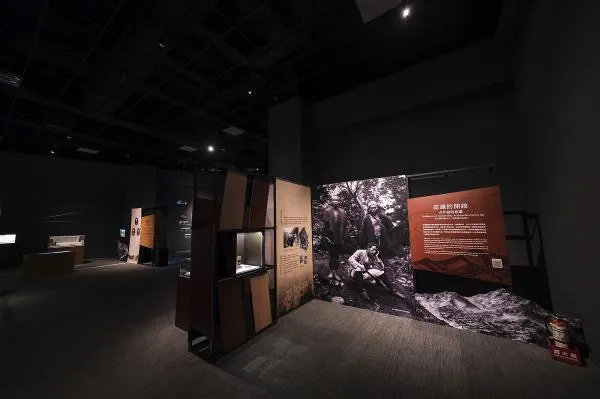
Taiwan’s complex and varied geography has fostered exceptional cultural diversity among its many peoples, making the island a magnet for ethnographers during the era of Japanese rule. Some 130 years ago, the Japanese anthropologist Ryuzo Torii, then in his twenties, visited Taiwan for the first of his many excursions to the island, bringing with him a heavy camera that used bulky glass dry plates and boundless curiosity. At a time when the Japanese administration’s reach had yet to extend deep into Indigenous communities, Torii risked his life crossing mountains to conduct fieldwork, meticulously documenting Indigenous ways of life.
Today, through three-way collaboration among scholars in Taiwan and in Japan along with Indigenous communities in Taiwan, Torii’s precious century-plus-old manuscripts and photographs are gradually being deciphered, opening a dialogue across over a century of time.
Deciphering century-old field notes
Over the years, people have encountered Torii through his published survey reports, autobiography, and other writings. Yet he also left behind 24 field notebooks from his Taiwan research, 472 glass-plate negatives, and many valuable ethnological specimens. The manuscripts, which have yet to be systematically organized or published, preserve intact firsthand observations that Torii made among Taiwan’s Indigenous peoples between 1896 and 1911—forming an archive that scholars in Taiwan and Japan have been eager to explore.
“Deciphering these manuscripts is an extraordinarily demanding undertaking,” says a smiling Mayaw Kilang, chief of the Museum of Archaeology at the Tainan Branch of the National Museum of Prehistory (NMP) and one of the exhibition’s curators. The notebooks contain extensive phonetic transcriptions of Indigenous languages and descriptions of everyday customs, including many details that baffled scholars in both Japan and Taiwan. Kilang cites by way of example the puzzling string of characters “王升貓” (wang sheng mao). After careful study, the two research teams realized that it recorded the Taiwanese Hokkien term lāng-sai (弄獅, or nong shi) meaning lion dancing. An unusually large vertical gap between the two elements of the handwritten character “弄” (nong, meaning “to do” or “to play”) had caused it to be mistaken for the two characters “王升” (wang and sheng). To further complicate matters, Torii wrote the character for “cat” (貓, mao) instead of that for “lion” (獅, shi). The discovery raised smiles and lent a human touch to this international effort to decode the manuscripts.
From subjects to interpreters
The first step in deciphering the notes is for a reading group of Japanese scholars to transcribe the cryptic cursive Japanese of a century ago into contemporary Japanese and create digital files. Researchers at the NMP then identify locations and comb through historical sources. Over the course of a century, however, much of what the notebooks recorded has changed—especially the pronunciation of Indigenous languages. Researchers must therefore return to Indigenous communities and invite people living there today to help find the answers.
Torii documented and collected materials 130 to 115 years ago through the professional lens of an anthropologist. From the perspective of Indigenous peoples today, however, those records can yield very different readings. For instance, one photograph in the exhibition shows Torii’s arrangement of assorted objects, which appears to be a conventional ethnographic display. Tao Indigenous people from Orchid Island explained, however, that the objects shown—made for rituals, dispelling evil, and everyday use—should never be placed together; doing so violates a traditional community taboo. The exhibition turns the photograph into an interactive installation that introduces visitors to the objects’ proper categories. In the process, a century-old image takes on a new perspective across time—an apt expression of the exhibition’s Chinese subtitle: “The dialogue between Ryuzo Torii and contemporary Indigenous peoples of Taiwan.”
Although deciphering the manuscripts is difficult, the process has brought unexpected moments of emotion and discovery. In notes on the Paiwan Tjakuvukuvulj tribal group that is located in today’s Shizi Township, Pingtung County, an abstract pattern resembling the lines of a palm left the team stumped. Only when a community elder in their eighties recognized it did the researchers realize that it echoed a motif on a ceremonial “millet backpiece” traditionally used in girls’ coming-of-age rites, reawakening a cultural memory.
The work continues
“We believe these manuscripts should not be studied by scholars working behind closed doors,” says Kilang. “They can be connected to people’s lives and made relevant to the present.” The 130 to 115-year-old notes still carry profound meaning for Indigenous peoples today as many communities are actively revitalizing their cultures. Whether rebuilding “turtle-shell houses” in Shizi Township or following mountain trails back to former settlement sites in search of ancestral roots, community members now draw on the more than century-old manuscripts and maps as vital guides to recovering their heritage and reconnecting with traditional memories.
At the end of the exhibition area, Kilang points to a subtle echo between the opening and closing photographs. The first is a historical image of Torii surrounded by Indigenous people; the last shows Indigenous community members and researchers of the present day standing side by side in discussion. This shift in position suggests how communities have moved from being people “recorded” by history to active agents in interpreting their own cultures.
Of the 24 Taiwan-related notebooks, the research team has been able to decipher only about four even after several years of work. The initial focus has been on content related to the Paiwan communities of Dralekedrek and Tjakuvukuvulj in Pingtung and the Tao people of Orchid Island. Many stories remain to be uncovered; this joint Taiwan–Japan journey of interpretation is far from over.
