



2026-10-5
(Courtesy of Taiwan Panorama September 2026)
Esther Tseng /photo byJimmy Lin
When COVID-19 brought global supply chains to a standstill, USB Type-C components used for charging and data transfer became critically scarce. Meanwhile, an electoral authority in South America was scrambling because electronic voting machines for a presidential election lacked audio codec chips. Taiwanese semiconductor manufacturers ultimately helped resolve both crises.
Behind these successful interventions were the tireless sense of mission of Taiwan’s engineers that IC businesses depend on, as well as an ingrained ability to collaborate for mutual benefit across the local semiconductor ecosystem. Together, they have created an irreplaceable source of resilience in global supply chains.
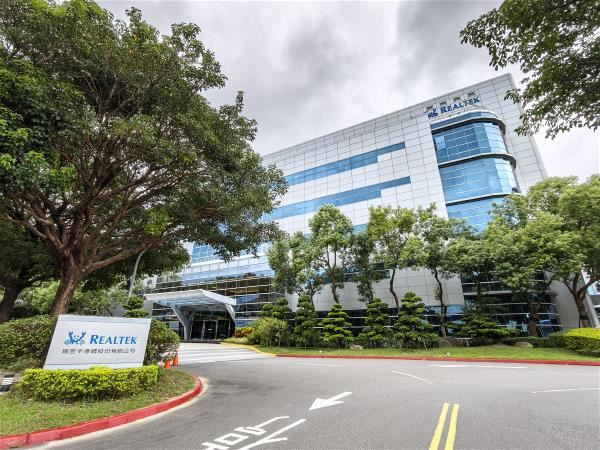
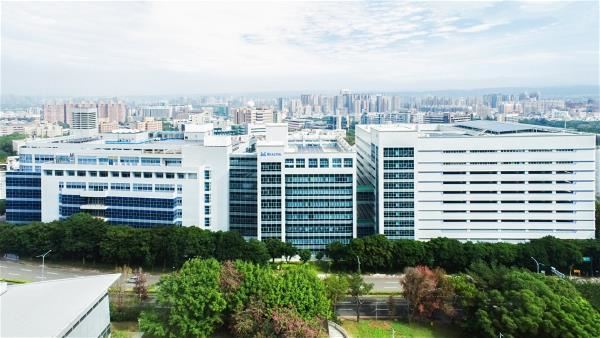
Realtek Semiconductor Corporation ships more than 2.5 billion chips a year. Its president, K.Y. Yen, laughs that with a product range encompassing more than 2,000 components, even he sometimes does not know where all the chips are sold.
Coming to the rescue: Brazil’s voting machines and USB Type-C
During the worldwide chip shortage of the pandemic, Brazil’s Superior Electoral Court contacted Realtek through Taiwan’s Ministry of Foreign Affairs for urgent assistance. A shortage of audio codec chips meant that a “personalized voice-guidance feature” could not be installed in electronic voting machines for the presidential election to help voters with visual impairments or limited literacy to cast their ballots. “Without this chip, their presidential election would have ground to a halt,” Yen says.
Yen recalls other moments that show his company’s determination. Once he and his team worked 14–16 hours a day for nearly two weeks to fix a USB bug. On another occasion, while tackling a Wi-Fi problem, they worked until 4 a.m., went out for breakfast, returned home for a brief rest, then came back to fix the bug and get the product to market.
That same dedication and sense of mission produced another memorable success during the pandemic, when a worldwide shortage emerged in USB Type-C power components for laptops. With special assistance from MOFA, the CEO of a well-known US laptop maker flew to Taiwan by private jet for a meeting held under stringent disease-control protocols.
At the time, Realtek’s alternative USB Type-C solution was still at the prototype stage. But to help its customer out of a bind, the team manifested an “engineers’ spirit” and completed validation and mass production within three months. This not only kept computers shipping worldwide but also gave Realtek a beachhead in the field. “It was an important turning point, because resolving that crisis deepened customers’ trust in Realtek,” Yen recalls.
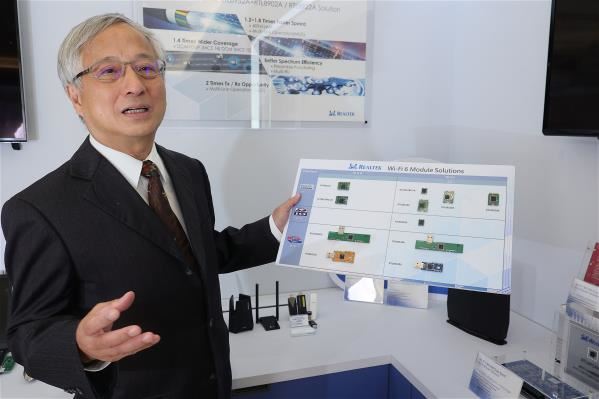
Three keys to market leadership: technology, customer service, and trend awareness
Yen identifies three keys that enable Realtek to stand out in the fiercely competitive semiconductor market. The first is technical mastery and pushing products to their limits, exemplified by the world’s first “three-in-one” chip it developed in 1997. The second is working with customers to innovate, and the third is perceiving emerging market trends. Together, these strengths keep the company competitive.
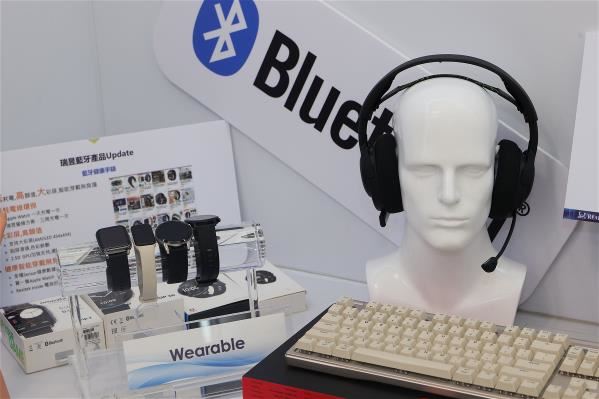
An engineer by training, Yen cites multimedia-on-demand (MOD) set-top boxes as an example. If a box is placed inside a drawer, the signal from an infrared remote cannot reach it, so Realtek worked with a customer to develop a Bluetooth remote. Faced with the challenge of high-power consumption and frequent battery changes, the team set itself a target and spent two years mastering low-power technology. Yen says the world’s leading low-power Bluetooth remote controls all now use Realtek technology.
PC webcams are another fiercely competitive market. Realtek makes practical use of AI by integrating low-power AI into PC cameras: The system locks automatically to save power when a user moves away, then recognizes the user and wakes up when they approach. The company has also developed low-power security IP cameras that require no connection to mains electricity. The same chip can also be used in the design of solar-powered birdwatching stations that automatically capture and identify passing birds, helping bring edge AI into wider use.
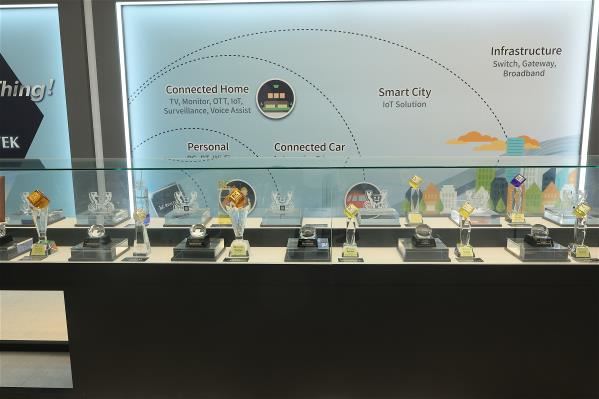
Taiwan’s unique semiconductor ecosystem
Yen also stresses the company’s goal of building “the nervous system of the digital world.” Amid surging demand for AI servers, Realtek has entered the SSD controller chip market. It also has a major presence in fiber-optic network access systems, network switches, Ethernet, USB hubs and other high-speed connectivity technologies. The firm continues to work with Taiwan Semiconductor Manufacturing Company (TSMC) and other foundry partners with advanced manufacturing process technologies to develop smaller, energy-saving lower-power chips with greater computing capacity.
Asked about Taiwan, Yen responds without hesitation that its integrated semiconductor supply chain is an unmatched advantage. IC design houses, foundries, and packaging and testing companies are all located on the same island and share a common language. Their representatives may even discover that they are former schoolmates, further lowering barriers to communication and collaboration.
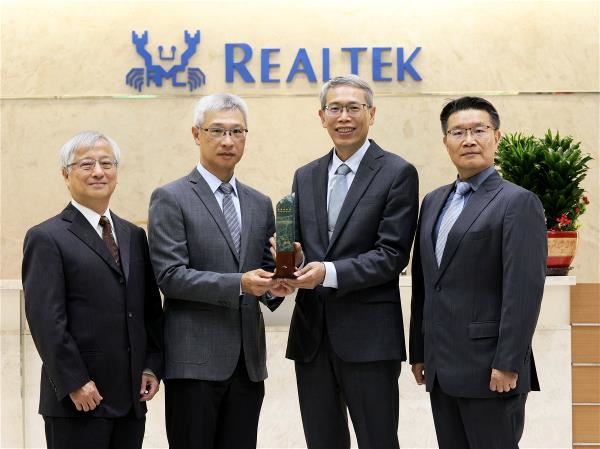
“We have dedicated teams that discuss with TSMC and UMC [United Microelectronics Corporation] how to reduce power consumption. Other teams know packaging inside out. By revising our designs and working closely with packaging companies, we can develop low-cost and competitive packaging solutions that are easy to produce.” This symbiotic relationship—built on constant face-to-face communication and an intuitive understanding between upstream and downstream partners—has turned Taiwan into “Silicon Island” with an industrial cluster that other countries find hard to match. The citation accompanying Realtek’s 2026 Presidential Innovation Award likewise praised the company for “improving the semiconductor ecosystem and strengthening Taiwan’s Silicon Island cluster.”
A Historic Turning Point: A 1997 Realtek Chip Paves the Way for Google’s Rise
In 1997, network chips were dominated by giants such as Intel. Realtek created the world’s first “three-in-one” Ethernet chip, integrating an analog IC, a baseband processor, and a network protocol chip into a single IC. This turned once-complex, expensive networking technology into an everyday product that ordinary consumers could afford.
Realtek not only demonstrated that Taiwanese IC design firms could compete with international giants in networking, it also helped catalyze the rise of Taiwan’s networking equipment industrial chain, including firms like Accton and D-Link. By making networking more affordable, Yen argues, Realtek helped fuel accessibility to higher internet speeds and the rapid growth of the global online population, clearing the way for the later rise of Google.
Embracing and Shaping International Standards: Realtek’s Global Strategy
Without standards, the semiconductor industry cannot expand in scale. Realtek Vice President Huang Yee-wei adds that a key reason the company can move quickly to fill supply gaps when competitors face shortages is its wholehearted embrace of international standards.
Many industry peers use proprietary protocols to lock in customers, but Realtek actively participates in standards organizations including the Institute of Electrical and Electronics Engineers (IEEE) and the Wi-Fi Alliance and contributes to specification development. One example is the standard for Energy Efficient Ethernet (EEE): Realtek engineers unselfishly contributed technical proposals to the IEEE 802.3az task force which established the global standard for EEE. This strategy of helping turn technology into international standards not only prevents Realtek from being locked out by rivals, but also elevates it from “adapting” to standards to taking a global leadership role in “shaping” them.
