2026-11-10
(Courtesy of Taiwan Panorama October 2026)
Cathy Teng /photo by Lin Min-hsuan
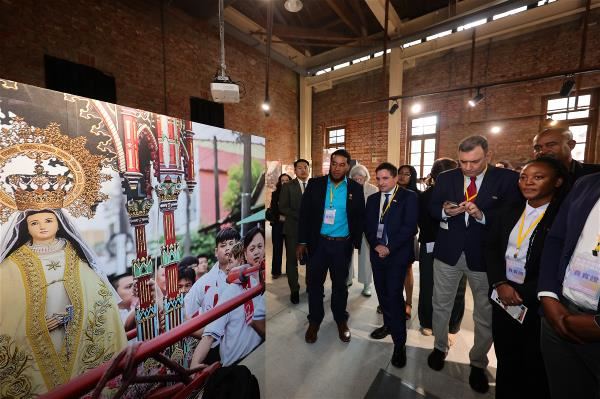
Have you seen that delightful photograph of a statue of the Baishatun Mazu (goddess of the sea) being carried into a convenience store? Or a statue of the Virgin Mary riding in a sedan chair in a crowded religious procession? At Taiwan Panorama 50 Through Photography—Taiwan in Focus, which is the magazine’s 50th anniversary photo exhibition, images like these, alive with Taiwan’s distinctive cultural energy and human warmth, instantly draw everyone’s gaze.
True to the meaning of “panorama,” Taiwan Panorama’s 50th anniversary photography exhibition offers a sweeping view of Taiwan over the past half-century. From everyday life and public infrastructure to democratic development and international interactions, each image embodies a profound story of this island.
Looking beyond language
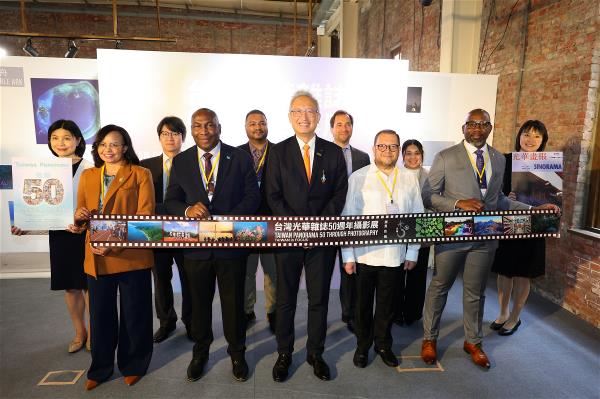
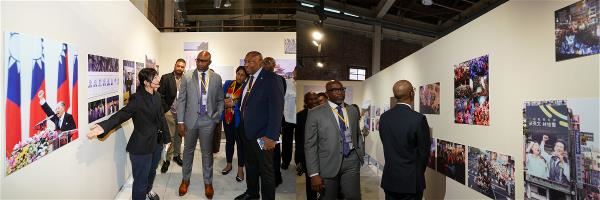
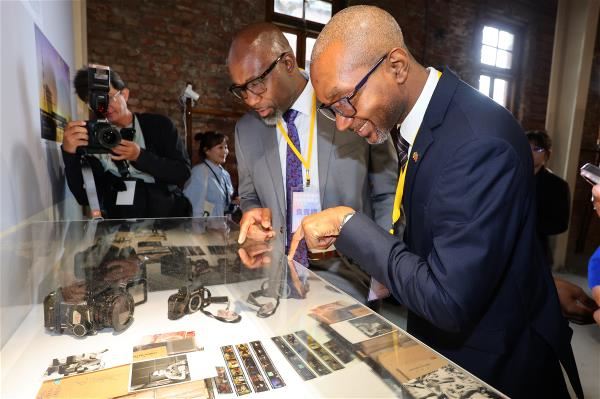
On opening day, several foreign diplomats and international journalists gathered around a Chinese-language slogan in one photograph, discussing it with curiosity. Though they could not read the words, they could, based on the people’s expressions, the street setting, and the atmosphere of the scene, imagine the story behind the image.
That is the appeal of photography. Even when people speak different languages, a photograph can convey the life and emotions of another place, offering a way to begin understanding an island like Taiwan.
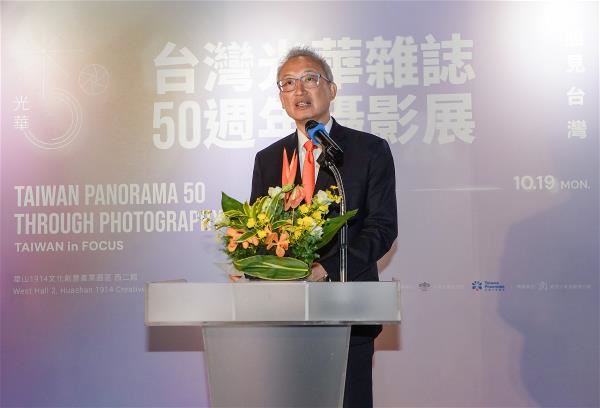
Speaking at the opening, Deputy Minister of Foreign Affairs François Chihchung Wu noted that Taiwan Panorama had amassed about 500,000 photographs over half a century—a precious asset of great importance in presenting Taiwan’s stories to the world.Over half a century, the camera has recorded not only prominent figures and major events, but also everyday life in all its warmth and vitality. Each photograph is a record the magazine’s photographers have made on foot and through the lens, one step and one image at a time.
An island’s memories in photographs
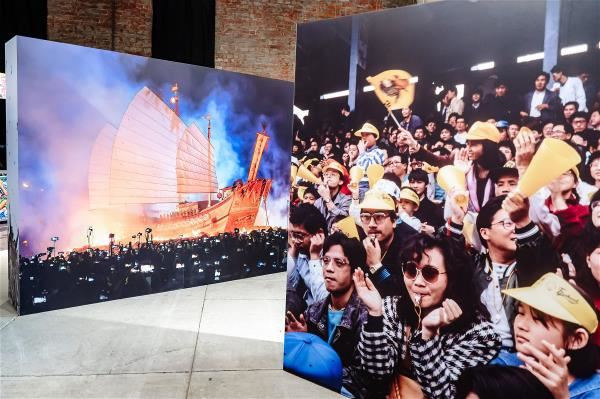
At the exhibition entrance, an enlarged photograph of a Brother Elephants baseball game takes visitors straight back to the feverish days of stands packed with yellow-clad fans and horns blaring. Strolling into the “Exposure of An Era” section, visitors encounter an entire wall documenting successive social movements during Taiwan’s period of political transition.
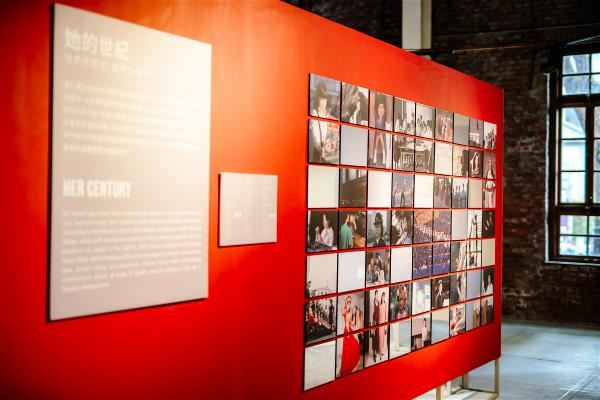
The political figures in the photographs may be readily recognizable. More moving, however, is the look in the eyes of Taiwan’s people as they eagerly take part in public affairs after years of authoritarian rule under martial law. Those intent gazes shine with boundless hopes for the island’s future.Moving along the long corridor of time, the images trace the awakening of Indigenous consciousness, the efforts of these people to speak out on their own behalf and be officially known by their own Indigenous names, and their long struggle for dignity and identity. In the “Her Century” section, photographs of Taiwanese women—including opera legend Yang Li-hua, former president Tsai Ing-wen, immigrant women who have made Taiwan their new home, Olympic boxer Huang Hsiao-wen, writer Yang Shuang-zi, and atmospheric scientist Lin I-i—portray their diversity and resilience.Waiting for the moment
Taiwan Panorama’s photographers work in the field across Taiwan, waiting for fleeting moments. The photograph of Donggang’s ritual Wangye boat-burning festival at the exhibition entrance was taken by senior photographer Jimmy Lin, who joined the magazine’s team in 2000, when film still held sway. A roll of film allowed only 36 exposures, so every press of the shutter required care—especially on overseas assignments in exotic countries, where there was no way to check the result immediately. Only when the film was developed could the photographer finally breathe easy.
a“Digital cameras make it possible to see an image immediately, but what makes a good photograph has never changed—every image that moves people comes from waiting.” This photograph of Donggang’s ritual Wangye boat-burning festival, for which Lin released the shutter at 5:14 a.m., is an example. To secure the best vantage point, he explains, he had to arrive the previous night and claim his spot. As he waited through the long hours of darkness, “I was so sleepy that I ended up dozing off with my arms wrapped around a tree beside me.”
Quiet resilience
The exhibition’s final section, with images suspended from the ceiling, includes a magical landscape photographed from the air by Lin Min-hsuan above the “Lake of Dreams” in Liujia, Tainan. A small green island shaped like Taiwan floats quietly on the water, its stillness profoundly arresting.
The island simply floats there in silence, much as Taiwan has carried itself over the past half-century: understated, yet filled with astonishing vigor.
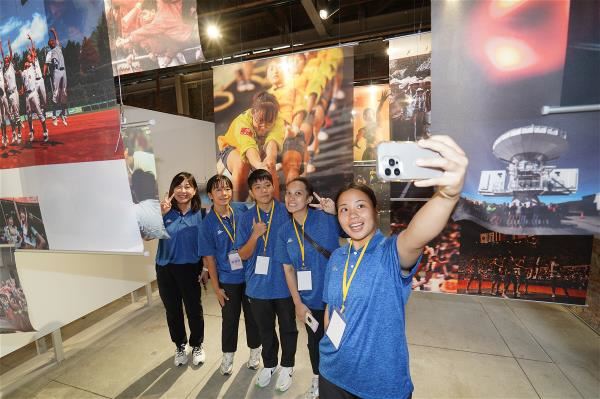
The exhibition also connects Taiwan’s dynamism to the wider world. Exhibits include pictures of the gritted-teeth determination in the eyes of the Jingmei Girls High School tug-of-war team, Taiwan’s strong performances in international baseball, shipments of protective masks sent to aid diplomatic allies during the pandemic, and Taiwan’s achievements through sustained work in astronomy and space. Looking back after 50 years, the Taiwan in these photographs is still moving forward.
Changing media, enduring mission
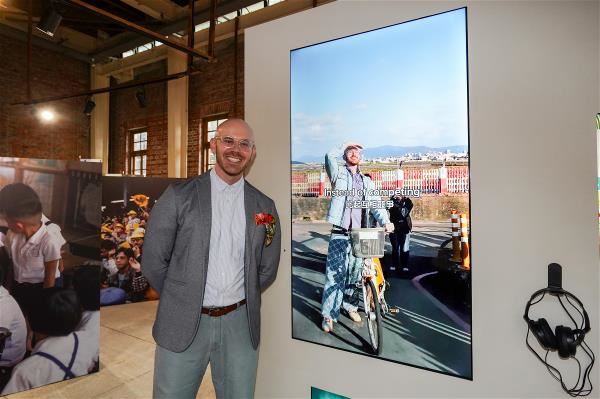
Times change, and ways of telling stories evolve. This is exemplified by a special invitee to the exhibition, Thomas Brackett Martenstein—known online as TomTom Recalculating—who won first prize in the Taiwan Panorama Special Award category of the #FindingTAIWAN_2.0: Where We Connect global short film competition (the awards ceremony for which was recently held at the Ministry of Foreign Affairs). His award-winning short film, Taiwanese Iron Horse, was inspired by the rich archive of photographs and articles on Taiwan Panorama’s website. Weaving together childhood memories of cycling with his father, his life in Taiwan, and Taiwan’s cycling culture, it creates a vivid dialogue across time and space between images and contemporary new media.
This interplay of perspectives echoes Deputy Minister Wu’s remarks at the opening: In the face of the digital wave, Taiwan Panorama will continue to keep pace with the times, making fuller use of its archive of roughly 500,000 photographs and its articles through digital platforms, online exhibitions, and diverse forms of content to bring the collection to new life.
Communication tools may change from one generation to the next, but Taiwan Panorama’s original commitment to helping the world understand Taiwan remains constant. With a new focus on “understanding Taiwan, witnessing the times, and connecting with the world,” the magazine will pursue its digital transformation, drawing on half a century of cultural foundations to continue telling Taiwan’s stories to the world in the digital age.